Short hair is unforgiving in a way longer lengths simply aren't. There's no length left to camouflage a product that's too heavy, no ponytail to hide a bad hair day in, and no extra inches to absorb excess oil or buildup before it starts showing at the roots. Every ounce of texturizing spray, every dab of clay, every spritz of hairspray is on full display within seconds of walking out the door, which is exactly why the products chosen for a short cut matter more than they do for almost any other length. Hairelle Fashion put together this guide to walk through what actually separates a good short-hair product from a wasted purchase, and how to build a small, reliable kit instead of a bathroom shelf full of half-used bottles.
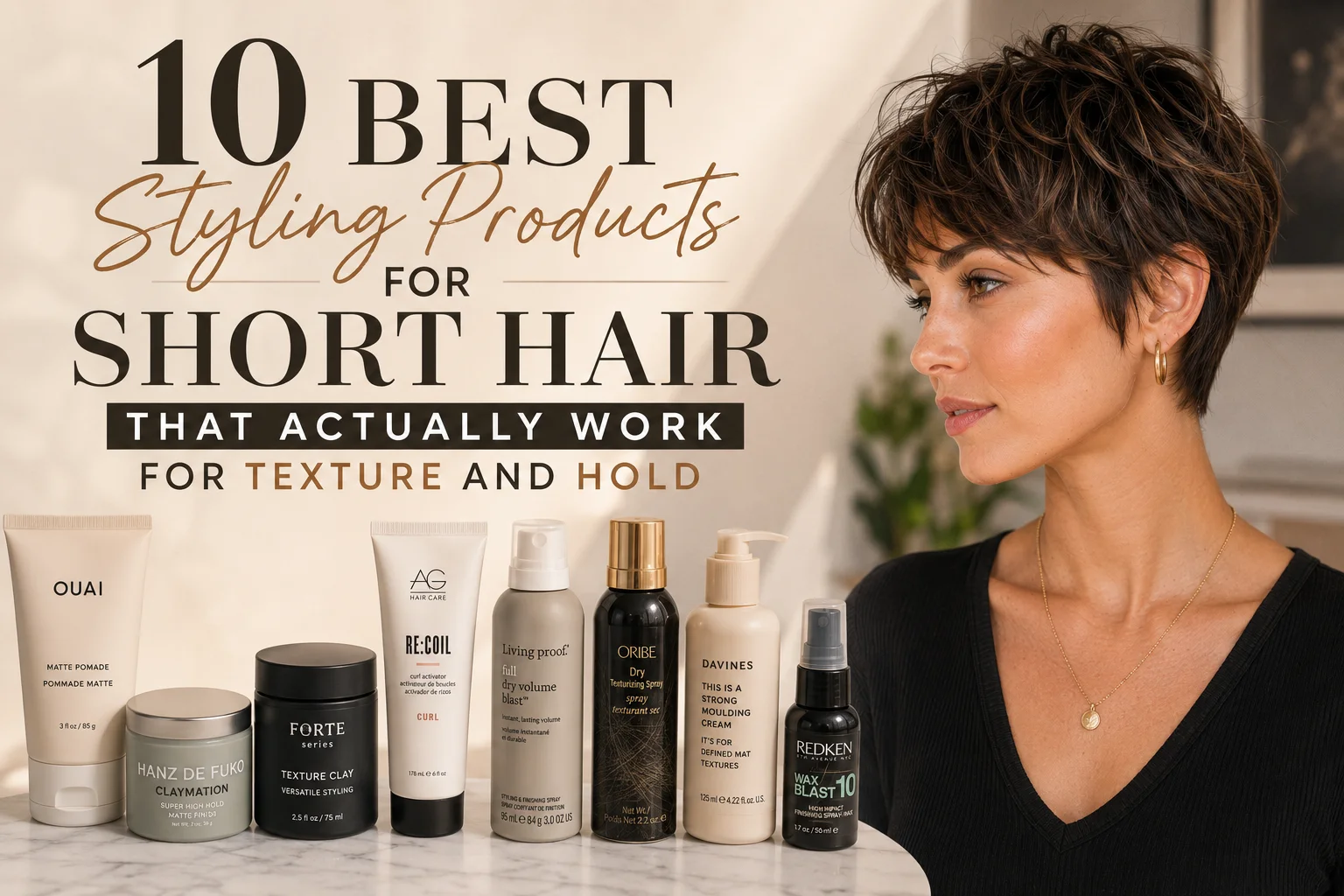
Most styling products on the market are formulated with longer hair in mind, which means their weight, hold strength, and finish are calibrated for strands that have more length to move and more surface area to spread the product across. Put that same formula on a pixie or a short bob and the math changes entirely — a mousse that reads as "light" on shoulder-length hair can flatten a cropped cut within an hour, and a hairspray built to hold curls in place on long hair can turn short layers into a stiff, immovable helmet. Short hair needs formulas built around its own physics: less surface area to absorb product, faster drying time, and styles that rely on precise texture and shape rather than sheer volume of hair to carry the look.
The five product categories that consistently show up in a well-built short-hair kit are texturizing sprays, sea-salt or beach sprays, matte clays or pastes, lightweight pomades, and root-lifting mousses. Each does a distinct job — separating strands, adding grit, defining edges, smoothing flyaways, or lifting the crown — and very few short styles need all five on the same day. Understanding what each category actually does, rather than buying based on packaging claims, is the fastest way to stop wasting money on products that sit unused after one try.
Read the full breakdown of every product category, technique, and hair-type recommendation on Hairelle Fashion.
Texturizing sprays are the most versatile product in a short-hair kit because they add grip without adding weight or shine — spraying into damp or dry hair and scrunching lightly gives strands the slightly undone, piece-y quality that makes a short cut look styled rather than simply short. Sea-salt sprays do something similar but with a coarser, beachier finish; they work best on hair with at least some natural wave or bend, since straight hair can end up looking merely dry rather than textured. Both are meant to be applied sparingly — a light mist rather than a full soak — because oversaturating fine, short strands with a salt-based product is one of the fastest ways to make hair feel brittle by midday.
Matte clays and pastes solve a different problem: definition. Where texturizing sprays create movement, a clay or paste is for locking pieces exactly where they're placed — separating the top of a pixie into deliberate sections, sharpening the edge of a fringe, or keeping cropped sides from softening throughout the day. The trade-off is weight; clays are denser than sprays, so a pea-sized amount worked between the palms before application goes much further than it looks like it should, and starting with less is always easier than trying to wash out an over-applied clay halfway through the day.
Pomade earns its reputation as a finishing product rather than a foundational one. A lightweight, water-based pomade smooths flyaways and adds a soft sheen without the heaviness of older, wax-based formulas — a small amount worked through the ends after the main style is set tames stray pieces without undoing the texture built earlier in the routine. Heavier, oil-based pomades exist for a reason too, but on short hair they're best reserved for sleek, close-to-the-head styles rather than anything meant to look textured or lifted.
Root-lifting mousse is the category most short-hair routines skip and shouldn't. Applied at the roots on damp hair before blow-drying with a round brush or fingers, a lightweight mousse builds the lift that keeps a pixie or crop from going flat by early afternoon — a problem far more common on short hair than on longer styles, where gravity does some of the volume work for you. Volumizing texture powder, worked directly into dry roots with the fingertips, does a similar job after the fact, adding grip and lift without needing a full restyle, which makes it one of the more useful touch-up products for a busy day.
A heat protectant spray is non-negotiable for anyone using a blow-dryer, flat iron, or curling wand on short hair regularly, since the same repeated heat exposure that damages longer hair happens faster and more visibly on a crop — split or fried ends are much harder to disguise when there's no length left to trim away discreetly. A lightweight thermal spray applied to damp hair before drying adds a protective barrier without weighing down the finished style, and it's worth treating as a mandatory step rather than an optional add-on.
Volumizing dry shampoo does double duty on short hair: it absorbs oil at the roots to stretch a style an extra day, and the powder residue itself adds grip that makes second-day texture easier to work with than perfectly clean hair. A flexible-hold finishing hairspray, used sparingly and from a distance, locks the finished look in place without the stiffness that a stronger-hold formula can create on a style built around movement rather than rigidity. Both are small additions to a routine, but they're the difference between a style that holds through a full day and one that needs a midday touch-up.
For more product guides and short-hair styling breakdowns, check this out from the wider Hairelle Fashion collection.
Fine or thin short hair needs the lightest end of every category — water-based, lightweight formulas across the board, since anything dense reads as greasy or flat almost immediately. Mousse and texture powder tend to do more work than clay or pomade on fine hair, since lift matters more than heavy definition when there isn't much natural density to begin with. Thick or coarse short hair can handle richer formulas and more product overall, and often benefits more from clays and pastes that can actually compete with the hair's natural volume and control frizz at the same time.
The cut itself matters as much as the hair type. A pixie generally wants texturizing spray and a light clay for definition at the crown and fringe. A short bob or lob leans on smoothing pomade and flexible-hold hairspray to keep the line clean without stiffness. Sleek, close styles favor pomade almost exclusively, while deliberately messy, undone short cuts lean on sea-salt spray and texture powder to build the piece-y, lived-in look that a smooth product would undo entirely. Matching the product category to both the hair type and the intended finish removes most of the guesswork from a short-hair styling routine.
A dependable short-hair routine follows roughly the same sequence regardless of the specific products used: start with a heat protectant on damp hair, apply a root-lifting mousse at the roots before blow-drying with fingers or a round brush for lift, then use a texturizing spray or clay once hair is fully dry to build the finished texture and definition. From there, a small amount of pomade tames any flyaways at the ends, and a light mist of flexible hairspray locks everything in place without stiffness. On second-day hair, dry shampoo at the roots and a fresh pass of texture powder or spray usually revive the style without a full restyle from scratch.
Following that order matters more than most people expect — applying a heavy product before a lightweight one buries the lighter formula's effect entirely, while working root-focused products in before length-focused ones keeps volume and texture from competing with each other. Once the sequence becomes routine, most short-hair styling takes well under ten minutes, which is a large part of what makes short cuts appealing in the first place, provided the product kit is actually suited to the hair.
Hairelle Fashion also covers face-shape matching and seasonal short-hair trends in more depth — learn more from the broader guide collection.
How many products does a short-hair kit actually need? Fewer than most people assume — a texturizing or sea-salt spray, one definition product (clay or pomade), a root-lifting mousse, and a light-hold finishing spray cover the vast majority of short styles. Heat protectant and dry shampoo are worth adding as practical extras, but a five- or six-product rotation is enough for almost any cut. Can products be layered? Yes, but sparingly and in the right order — starting light and building up in small amounts avoids the over-application that causes most short-hair styling frustration. And when a product feels "too heavy," the fix is almost always to use less of it rather than switching formulas entirely, since even the right product applied too generously will weigh a short cut down.